
Digital Signature Certificates (DSC) are, in the present digital-first world, the most vital to the safety of online transactions, any type of authentication, & sensitive data protection. Most of the users buy a DSC to meet such compliance requirements as GST, MCA, or ITR filing, but people tend to confuse Signing and Encryption in Digital Signature Certificates.
What Is a Digital Signature Certificate?
The Digital Signature Certificate is a kind of electronic identity that is issued by a licensed Certifying Authority (CA). It authenticates the identity of the signer and provides information integrity in electronic documents and online transactions. DSCs are widely used for:
- MCA and ROC filings
- GST returns
- Income Tax filings
- E-tendering and eprocurement
- Secure email communication
Depending on usage, DSCs are broadly classified into Signing DSC and Encryption DSC.
What Is a Signing DSC?
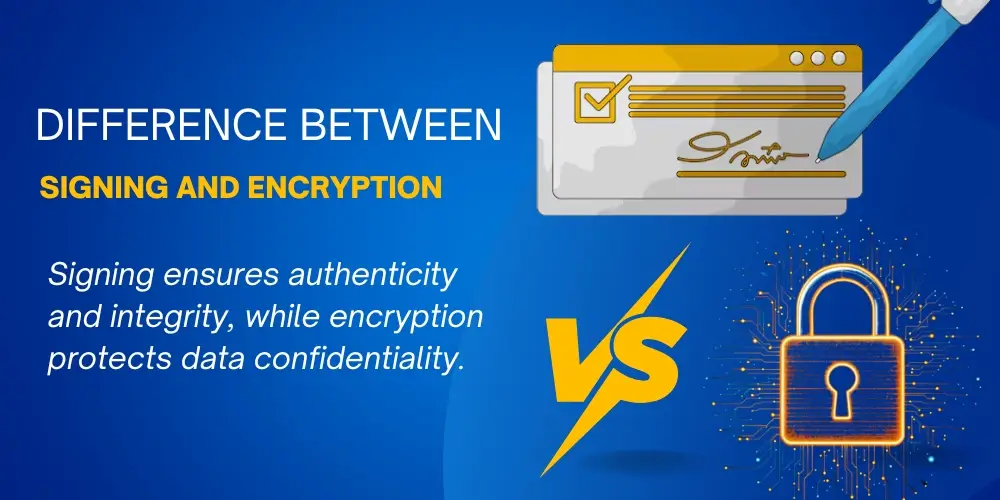
A Signing DSC is used to digitally sign documents and transactions. It validates the identity of the signer & confirms that the document has not been altered after signing.
In simple words, a Signing DSC answers:
- Who signed the document?
- Was the document changed after signing?
How Signing DSC Works
When you digitally sign a file:
- A unique hash of the document is created.
- The hash is encrypted using the signer’s private key.
- Anyone with the public key can verify the signature.
This creates a legally valid Encrypted Digital Signature under the IT Act, 2000.
Use Cases of Signing DSC
- GST return filing
- MCA forms (DIR-3, AOC-4, MGT-7, etc.)
- Income Tax e-filing
- E-tender submissions
- Contract and agreement signing
Benefits of Signing DSC
- Ensures authenticity
- Maintains document integrity
- Provides non repudiation (signer cannot deny signing)
- Legally valid & compliant
What Is an Encryption DSC?
The sensitive data are encrypted by an Encryption DSC such that only the receiver can decrypt them. It emphasises confidentiality as opposed to signing.
In simple words, Encryption DSC answers:
- Who is allowed to read this data?
- Is the data protected from unauthorized access?
How Encryption DSC Works
- Data is encrypted using the recipient’s public key.
- Only the recipient’s private key can decrypt and read the data.
This ensures secure transmission of confidential information such as financial records or personal data.
Use Cases of Encryption DSC
- Secure email communication
- Data protection in ERP and accounting systems
- Internal confidential file sharing
- Compliance data exchange with regulators
Benefits of Encryption DSC
- Protects sensitive data
- Prevents data leakage
- Ensures confidentiality
- Ideal for enterprises and regulated industries
Signing vs Encryption: Key Differences Explained
Purpose
- Signing DSC: Authentication and integrity
- Encryption DSC: Confidentiality and data protection
Function
- Signing DSC: Digitally signs documents
- Encryption DSC: Encrypts and decrypts data
Legal Usage
- Signing DSC: Used for statutory filings and compliance
- Encryption DSC: Used for secure communication
Visibility
- Signing DSC: Signature is visible and verifiable
- Encryption DSC: Data remains unreadable to others
Which DSC Should You Choose?
Choose Signing DSC
- You only need DSC for GST, MCA, or ITR filing
- Your primary requirement is document authentication
Choose Encryption DSC
- You exchange confidential data regularly
- Secure email communication is essential
Why Buy Digital Signature Certificates from MeraDSC?
MeraDSC Digital Signature Certificate Provider offers reliable, affordable, and compliant DSC solutions for individuals, professionals, and organizations across India.
Why MeraDSC?
- Authorized and trusted DSC provider
- Fast issuance with quick verification
- DGFT/ICEGATE, Signing, Encryption, and Combo DSC options
- Support for GST, MCA, DGFT, and e-tendering
- Dedicated customer support